Entry · Ref FBCCHV-T
When to Consider Storefront Glass Replacement for Your Business
- Posted
- 2026-10-06
- Last amended
- 2026-10-06
- Account
- @mdzb8gktan
If you own or manage a commercial property in Dallas-Fort Worth, you already know that your storefront is the first thing customers see. A cracked or foggy glass panel does more than hurt curb appeal. It can signal neglect, reduce natural light, and even create a safety hazard. Over the years, I have worked with dozens of business owners who put off storefront glass replacement until a small problem turned into an expensive emergency. Understanding what goes into that glass and when to act can save you time, money, and a lot of headaches.
How Storefront Glass Differs from Residential Windows
Most people think glass is glass. But the glass in a commercial storefront is built differently than what you find in a home. Storefront assemblies usually use tempered glass or laminated glass, both of which are classified as safety glass. Tempered glass is heat-treated to be several times stronger than standard glass. When it breaks, it crumbles into small, blunt pieces instead of jagged shards. Laminated glass has a plastic interlayer that holds the glass together even after impact. That is why you often see it in doors and lower panels where breakage risk is higher.
Another key difference is the framing. Storefronts typically use aluminum frames, though some older buildings still have wooden frame or vinyl frame sections. Aluminum frames are lightweight, resistant to corrosion, and easy to maintain, but they require precise fitting during installation. A mismatch in the frame can lead to air leaks, water intrusion, and premature seal failure. That is why a professional storefront glass replacement should always include an inspection of the surrounding frame and seals.
Common Problems That Lead to Replacement
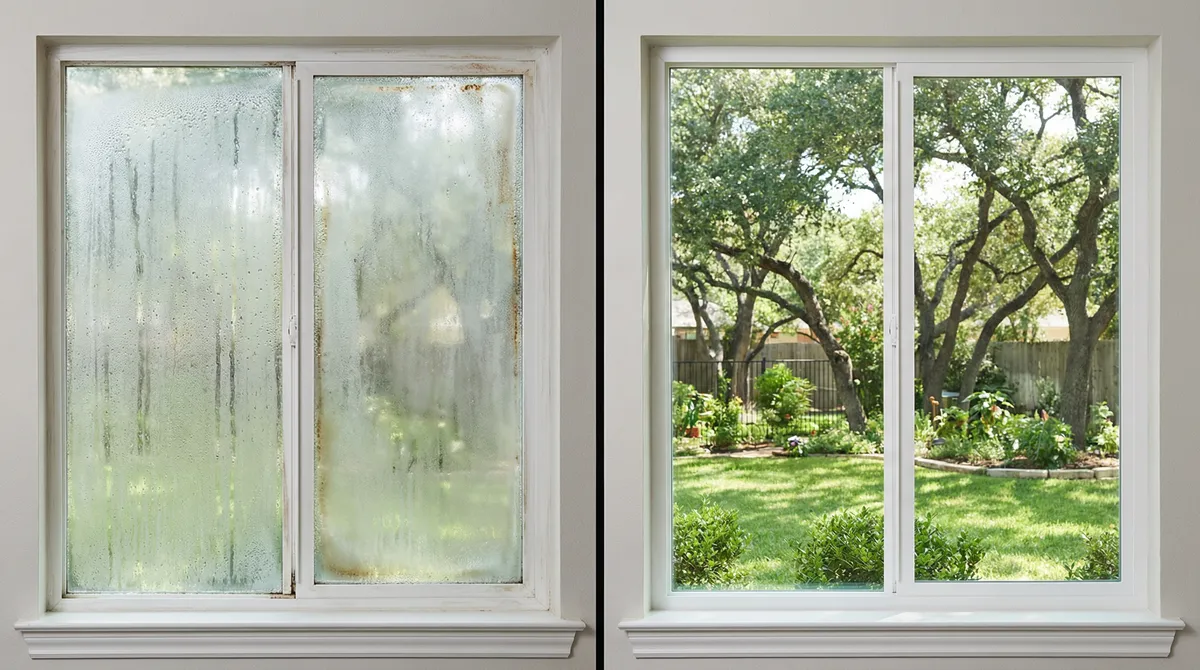
The most frequent issue I see in commercial glass is seal failure. Modern storefront windows are almost always dual-pane window units, also called insulated glass units or IGUs. They consist of two panes of glass separated by a spacer and sealed around the edges. That sealed space is filled with an inert gas, often Argon gas, to improve insulation. Over time, the sealant, usually a butyl tape or a similar adhesive, can degrade. Once the seal is compromised, moisture gets in and the glass starts to look foggy.

Foggy glass is a clear sign that the insulated glass unit has failed. It cannot be cleaned or repaired. The only fix is to replace the entire IGU. Some property managers try to save money by replacing just one pane, but that rarely works with modern IGUs. If the glass is part of a sealed unit, the whole thing has to come out. That is where a specialized storefront glass replacement comes in. The technician has to match the thickness, the Low-E glass coating if present, and the gas fill to maintain performance.
Shattered glass is another obvious trigger. Whether from a break-in, a stray baseball, or a severe hailstorm, shattered glass needs immediate attention. A boarded-up storefront hurts business and invites further vandalism. In those cases, speed matters. A good glass company can usually fabricate a replacement tempered glass panel within 24 hours and install it the same day.
Energy Efficiency and Glass Warranties
Energy efficiency is a growing concern for commercial property owners in Dallas-Fort Worth, where summer temperatures routinely exceed 100 degrees. An old single-pane window storefront is basically a hole in the wall. It lets heat pour in and drives up cooling costs. Upgrading to an energy-efficient glass system, even on a partial replacement, can make a measurable difference. Modern IGUs with Low-E glass and Argon gas can reduce solar heat gain by 30 percent or more compared to standard clear glass.
When you order a replacement, ask about the glass warranty. Most reputable manufacturers offer a warranty that covers seal failure and spontaneous breakage for a set number of years. A typical warranty might run 10 to 15 years for the glass unit itself. Labor is usually covered for a shorter period, often one to two years. Keep in mind that a warranty only applies if the unit is installed according to the manufacturer's specifications. If the installer uses the wrong desiccant or skips the butyl tape step, the seal may fail early and the warranty will not help.
What Goes On Inside the Glass Unit
I find that a lot of building owners do not realize what is actually inside their windows. An IGU is not just two pieces of glass glued together. The spacer bar contains a desiccant, which is a drying agent that absorbs any moisture that makes it past the primary seal. The desiccant keeps the air inside the unit dry so that condensation does not form between the panes. When the seal fails, the desiccant becomes saturated. Once it can absorb no more moisture, fogging begins. That is why seal failure is the root cause of foggy glass.
Some high-performance units also include a third layer or a special coating. Low-E glass has a microscopically thin metallic coating that reflects infrared light while letting visible light pass through. That coating is delicate. If the glass is handled improperly during installation, the coating can be damaged. A professional installer knows how to handle Low-E glass without touching the coated surface. They also know how to check that the Argon gas concentration is correct before sealing the unit.
Practical Considerations for Business Owners
If you are weighing whether to repair or replace a damaged storefront panel, here are a few things to consider:
- Age of the existing glass. If the building is more than 15 years old, the glass is likely a standard clear IGU without Low-E coating. Replacing it with a modern energy-efficient glass unit will improve comfort and lower utility bills.
- Type of damage. Light scratches or surface chips on tempered glass are often cosmetic. But if the damage reaches the edge of the panel, the glass may break spontaneously. Edge damage compromises the structural integrity of tempered glass.
- Frame condition. Aluminum frames can last decades, but the gaskets and seals around the glass degrade. If the frame itself is corroded or warped, you might need a full frame replacement, not just glass.
- Safety code requirements. Commercial buildings must meet specific safety glass standards, especially in doors and sidelites. Laminated glass or tempered glass is usually required. Check local codes before ordering.
Another factor is whether the glass is part of a larger system. Some modern storefronts use structural glazing where the glass is bonded to the frame with silicone. That type of installation requires special adhesives and curing time. Not every glass company has the experience to handle it.
When to Call a Professional
I have seen too many DIY attempts go wrong. Someone tries to remove a broken pane and cuts themselves on the jagged edges. Or they order a standard dual-pane window from a big-box store only to find it does not fit the aluminum frame. Storefront glass replacement is not a weekend project. The glass is heavy, the tolerances are tight, and the seal integrity depends on proper technique.
A qualified glass company will start by measuring the opening exactly. They will order the correct IGU with the right glass type, coating, and gas fill. They will bring the necessary safety equipment and tools to remove the old unit without damaging the frame. They will clean the frame channel, apply fresh butyl tape or silicone, and set the new unit with the correct shims. Finally, they will install new glazing gaskets and check for air leaks.

After the installation, ask about the glass warranty and keep the paperwork. If the unit fogs up again within the warranty period, you are covered. Most manufacturers also offer a limited warranty against spontaneous breakage, which can happen if the glass has a nickel sulfide inclusion. It is rare, but it does happen. A good warranty gives you peace of mind.
Final Thoughts
Your storefront is a working part of your business. It keeps the weather out, lets light in, and presents your brand to the street. When that glass fails, it is not just a maintenance issue. It is a business issue. Acting quickly, choosing the right materials, and hiring an experienced crew will get your storefront back to looking sharp and performing well. Whether you are dealing with foggy glass, shattered glass, or just an outdated single-pane window, a professional storefront glass replacement will restore both the appearance and the energy efficiency of your building.